
 Breeding Source Elimination
- Kills Before Flight
- Safe for Aquatic Life
- WHO Prequalified
Root-Cause Mosquito Defense
Mosquito Larvae Control in Hyderabad
Adult fogging only addresses flying mosquitoes today, while stagnant water breeds tens of thousands more tomorrow. Our bio-larvicide and Insect Growth Regulator (IGR) treatments stop larvae from ever developing wings and leaving water bodies.
Scientific Larval Source Management
Why Anti-Larval Treatment is 90% More Effective than Fogging Alone
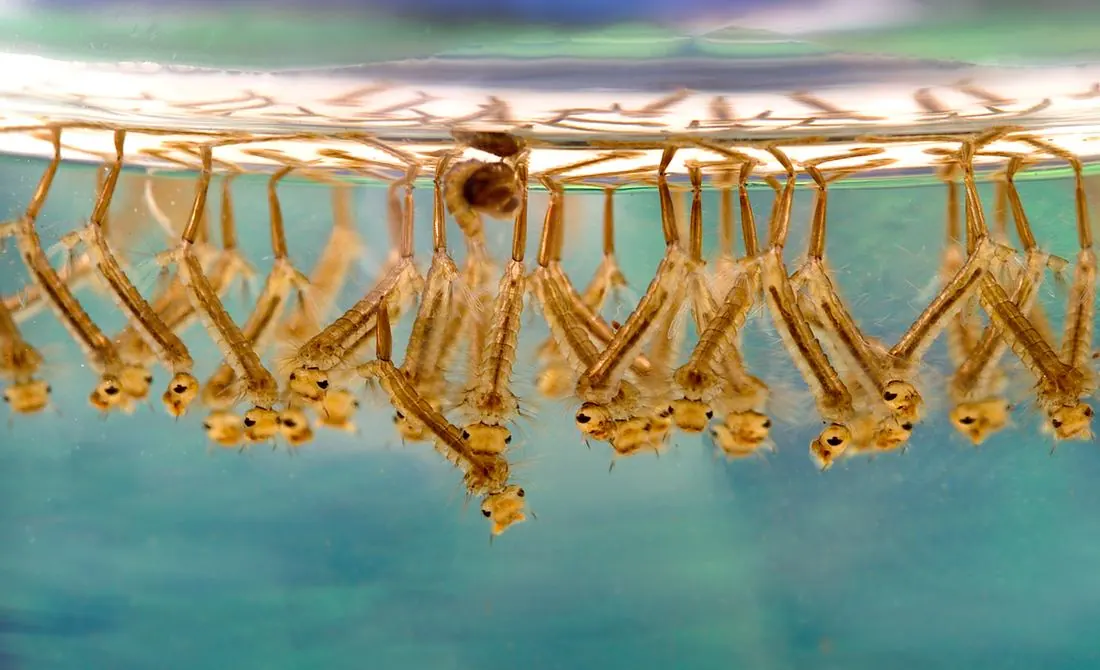
A single female mosquito deposits between 100 and 300 eggs every few days in standing water. Within 48 hours, these eggs hatch into mobile larvae (commonly called wrigglers), which develop into pupae and take flight as disease-carrying adults in just 7 to 10 days.
In Hyderabad's rapidly developing corridors—such as Hafeezpet, Kondapur, Madhapur, Tellapur, and Nanakramguda—construction water curing tanks, elevator sump pits, unsealed rainwater harvesting wells, and stormwater gullies become breeding grounds that produce millions of mosquitoes every month.
Our 3-Step Anti-Larval Protocol
- Water Source Mapping & Dipper Audit: Certified inspectors map every collection point, testing water samples with scientific dippers to determine the species, density, and larval development stage.
- Targeted Biological & IGR Application: We apply Central Insecticides Board (CIB) and WHO-prequalified larvicides:
- BTI (Bacillus thuringiensis israelensis): A natural biological bacterium that is lethal specifically to mosquito and midge larvae upon ingestion, while harmless to fish, plants, and mammals.
- Insect Growth Regulators (Pyriproxyfen): Hormonal juvenile mimics that prevent larvae from shedding their outer skin to become flying adults, breaking the reproductive chain for weeks.
- Temephos 50% EC (Abate): Proven organophosphate larvicide for non-potable drains, stagnant swamps, and sewage channels.
- Continuous Monitoring & Source Reduction: We schedule bi-weekly or monthly inspections during high-risk monsoon and post-monsoon months, issuing physical compliance reports for facility managers and municipal audits.
Safety for Environment & Non-Target Organisms
Our biological larvicides selectively target the digestive alkaline gut of mosquito larvae. They do not harm ornamental pond fish (like Guppies or Koi), birds, domestic pets, or garden vegetation.
- WHO-Prequalified & CIB Approved Bio-Larvicide Formulations
- Neutralizes up to 100,000 Mosquitoes per Water Body before Flight
- Non-Toxic to Fish, Aquatic Wildlife, Birds & Domestic Pets
- Essential for Construction Sites, Water Harvesting Wells & Sumps
- Fortnightly & Monthly Routine Monitoring AMC Schedules
- Compliant with Hyderabad Municipal Corporation (GHMC) Health Directives
Target Sites & Pricing Models
| Construction Site Basements | Quote on Request |
| Rainwater Harvesting Pits & Sumps | Per Unit / Visit |
| Gated Community Storm Drains | Monthly AMC |
| Commercial Chiller / Cooling Towers | Quarterly AMC |
| Vacant Plots & Low-Lying Stagnation | Custom Quote |
| Combined Anti-Larval + Fogging AMC | Package Discount |
* Custom quotes provided after quick video or photo evaluation on WhatsApp, or following a physical site survey for large commercial infrastructure.
Builders & Project Managers
Avoid municipal fines and stop worker illness with our turn-key vector management contracts for active construction developments across Hyderabad.
Builder Project QuoteFrequently Asked Questions
Anti-Larval Treatment FAQs
Answers to key questions regarding larval management in residential and commercial premises.
Can larvicides be used in drinking water sumps or overhead tanks?
For potable drinking water storage, we strictly use mechanical inspection, non-chemical deep cleaning, and mesh installation on overflow pipes. Bio-larvicides and IGRs are reserved for non-potable rainwater harvesting pits, drainage collection sumps, elevator shafts, and wastewater tanks.
How quickly does the anti-larval treatment kill wrigglers?
BTI bio-larvicides kill active larvae within 12 to 24 hours of ingestion. IGR formulations prevent pupae from emerging into adults, preventing newly spawned generations from taking flight over an extended 21-to-30 day window.
Why is fogging alone not enough to solve a mosquito issue?
Thermal fogging only kills mosquitoes that are currently flying through the smoke. If nearby stagnant drains or basements contain millions of larvae, new adult swarms will emerge within 48 to 72 hours. Anti-larval treatment attacks the biological root of the infestation.
How often should anti-larval treatment be conducted?
During the monsoon and humid post-monsoon months (June through November), anti-larval treatments are most effective when refreshed every 14 to 21 days to cover the mosquito incubation cycle.
Eliminate Breeding Grounds
Stop Mosquitoes at the Larval Stage
Fast survey and tailored quotes across Hafeezpet, Kondapur, Madhapur, Gachibowli, Kukatpally, Miyapur, and all Hyderabad.